
Part I: Introduction to the Swiss Real Estate Market
Homeownership in Switzerland
1.1 Homeownership Rate and Culture
Switzerland has one of the lowest homeownership rates in Europe, with less than 40% of residents owning their primary residence[1]. The national average has hovered between 36% and 38% in recent years, with wide variations by canton. Urban centers like Geneva and Basel exhibit even lower rates, while rural or alpine areas (e.g., Valais, Appenzell) tend to have higher ownership figures:
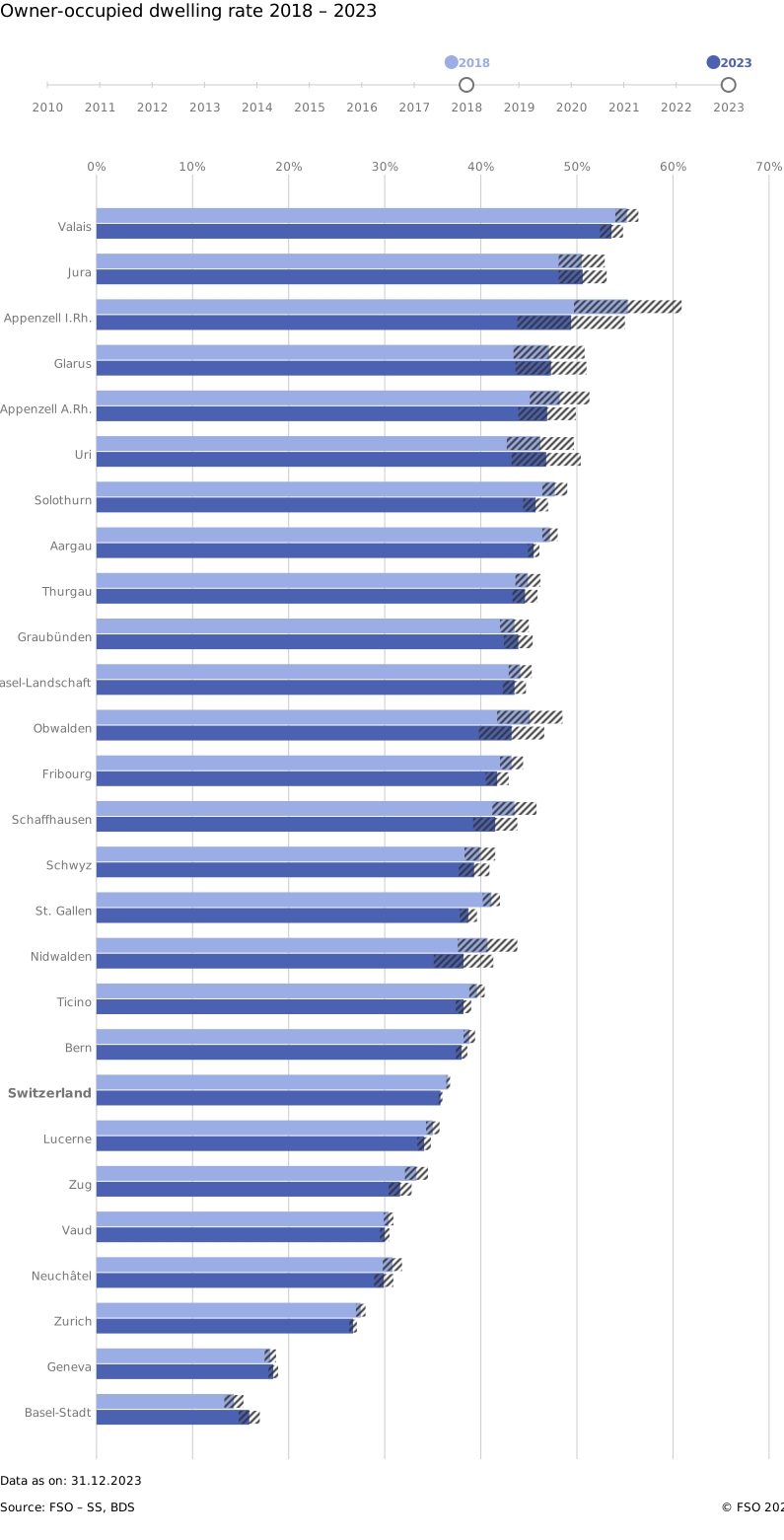
This modest ownership rate contrasts sharply with countries like Spain or Italy, where homeownership is culturally expected. In Switzerland, renting is seen as practical, flexible, and socially acceptable. Long-term tenancy does not carry the stigma it might elsewhere. Many tenants enjoy stable, multi-decade rental arrangements with strong legal protections that limit rent increases and prohibit arbitrary evictions.
Historically, this housing model emerged due to a combination of:
- Conservative lending policies, such as a mandatory 20% down payment and income-based amortization[2].
- Limited buildable land, constrained by mountains, lakes, and strict zoning.
- A strong cooperative housing sector and presence of non-profit developers.
As a result, Switzerland has maintained a housing culture where renting is the norm, not a compromise.
1.2 Why So Many Swiss Rent
The preference for renting in Switzerland is not just cultural—it’s also deeply practical:
- High property prices in cities make ownership inaccessible for many households.
- Strict mortgage regulations require borrowers to show that total housing costs do not exceed one-third of gross income[3].
- Zoning laws and construction permits are closely controlled by cantonal and municipal authorities, slowing housing supply.
- Tenant-friendly laws provide strong protections, including indefinite leases and regulated rent increases.
From the tenant’s perspective, Swiss rental housing is often modern, professionally managed, and well-maintained, especially in new developments. Because the majority of people rent, market pressure incentivizes quality and upkeep.
In effect, Switzerland’s rental market has evolved to meet high expectations—attractive to families, professionals, and even retirees.
1.3 Why Does Homeownership Still Exist
One might wonder: if renting is profitable for investors and safe for tenants, and if pension funds own large shares of residential portfolios, why hasn’t the entire housing market been absorbed by institutions?
There are several key reasons:
- Lex Koller, a federal law, restricts real estate purchases by non-Swiss nationals unless they meet strict conditions (such as residency or primary residence use)[4].
- Zoning regulations give municipalities discretion over density, land use, and whether an area favors owner-occupied or rental development.
- Some cantons apply anti-speculation rules, such as minimum holding periods or capital gains taxes, to deter short-term flipping[5].
- Housing cooperatives and public land ownership play a protective role, preserving affordability and resisting speculation.
In short, legal frameworks and policy tools prevent over-concentration of land ownership—ensuring room for private homeownership even in a rent-oriented market.
1.4 Increasing Interest in Ownership Among Younger Generations
While renting remains dominant, recent trends show growing interest in ownership, particularly among younger dual-income households and international buyers.
This shift is driven by:
- Long period of historically low mortgage interest rates, making borrowing more attractive.
- A post-pandemic desire for space, flexibility, and ownership autonomy.
- The long-term financial appeal of owning vs. renting, especially in growing suburbs.
- Changing lifestyle values — a preference for home-based stability and investment in real assets.
Swiss Federal Statistical Office (BFS). “Homeownership Rate in Switzerland.” https://www.bfs.admin.ch ↩︎
Standard mortgage terms require 20% equity and amortization to 65% LTV within 15 years. This creates a natural barrier to speculative buying. ↩︎
Known locally as the “one-third rule”: the combined cost of mortgage interest, amortization, and maintenance must not exceed 33% of gross income. ↩︎
Lex Koller (SR 211.412.41) limits real estate purchases by foreigners unless for personal residential use. Secondary residences and investment purchases are highly restricted. Wikipedia article: https://de.wikipedia.org/wiki/Lex_Koller ↩︎
See UBS: Real Estate Capital Gains Tax at https://www.ubs.com/ch/en/services/guide/mortgages-and-financing/articles/property-gains-tax.html ↩︎