
Part I: Introduction to the Swiss Real Estate Market
3. Property Types: What Can You Buy?
The Swiss property market offers a variety of purchase options, but not all are equal in terms of legal structure, timeline, and buyer obligations. Whether you’re a resident or foreign buyer, understanding what you can buy — and what that means in practice—is critical.
This chapter outlines the key types of properties available and introduces the condominium ownership model, which is the legal backbone of most apartment ownership in Switzerland.
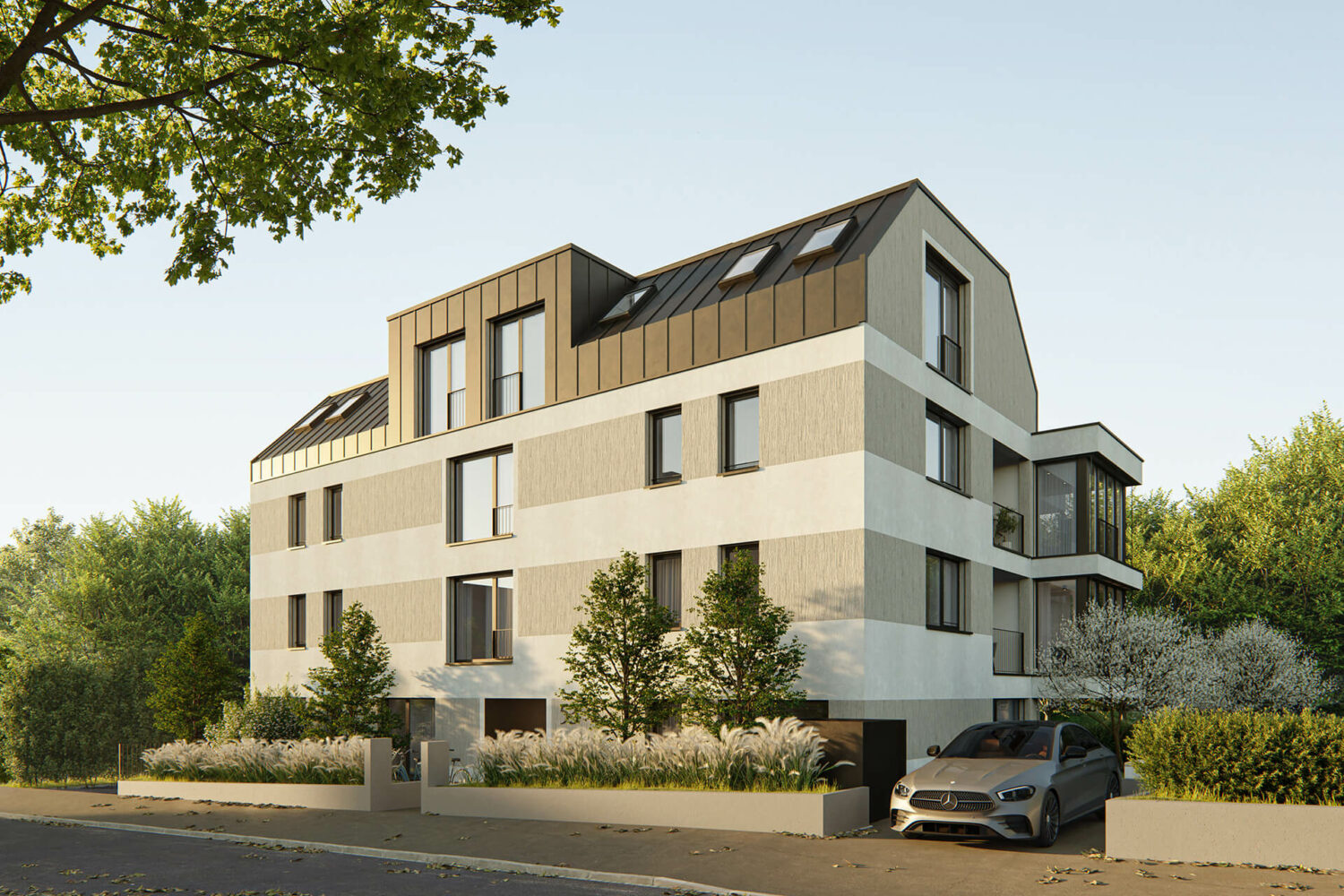
hdpf.ch/de/project/haute-living
3.1 Off-Plan Apartments
Off-plan purchases—known in French-speaking Switzerland as vente sur plan and in German as “Kauf vom Plan”—refer to buying an apartment before it’s built or completed, based on architectural plans.
This model is common in new developments and offers advantages such as:
- Access to newer buildings with modern standards and energy efficiency
- Customization options (e.g. finishes, kitchen layout, tiles)
- A staged payment schedule aligned with construction milestones
- Potential price advantage if bought early
However, it also comes with risks and obligations:
- You become legally committed once you sign the notarized purchase agreement, even though the property doesn’t exist yet.
- You must rely on construction guarantees, such as the five-year defect liability (garantie des défauts / Mängelgewährleistung).
- Your financing must often be in place before construction starts, and staged payments must follow the legal framework of the canton.
The full legal and financial process of buying off-plan is detailed in the Buying Off-Plan and Financing Your Apartment chapters.
Off-plan is often the only path to ownership in high-demand areas where new supply is sold before completion.
3.2 Existing Properties (Resale Market)
Buying an existing (previously owned) apartment is similar to resale purchases in other countries. It can offer:
- Faster access (you can often move in within 3–6 months)
- More choice in established neighborhoods
- Opportunity to negotiate on price, especially in a slower market
However, it also comes with:
- Transfer taxes (vary by canton)
- Possible renovation costs
- No customization
- Less transparent pricing—especially if the seller sets the price without a professional valuation
In Swiss cities, the resale market is often tightly supplied, especially for well-located apartments. Competition can be strong, and mortgage pre-approval is often needed to be taken seriously by the seller.
In competitive areas like Zurich, Lausanne, or Geneva, it’s common for resale apartments to be sold via sealed bid rounds, sometimes called auction rounds or tour d’enchères. The seller (or their agent) may:
- Set an asking price or guide price
- Request written offers from all interested buyers by a fixed deadline
- Sometimes organize multiple rounds—first round to screen offers, second round to choose among the top bids
While this is not a public auction, it functions similarly: the highest or most attractive offer wins, and there’s usually no negotiation afterward. Serious buyers should be ready with mortgage pre-approval and legal counsel before submitting a bid.
This format increases transparency for sellers but can be stressful for buyers—especially foreigners unfamiliar with the practice. It’s essential to understand how the process works and to move quickly when a property you like becomes available.
3.3 Condominium ownership
Most apartments in Switzerland are sold under the STWE/PPE system:
- In French: Propriété par étage (PPE)
- In German: Stockwerkeigentum (STWE)
- In English: Condominium ownership
Under this system, you own your individual unit (apartment) and a share of the common parts of the building—such as the stairwells, roof, garden, garage, etc.
Each owner’s share is defined in thousandths (Tausendstel / Millièmes), and this ratio is used to calculate:
- Your share of building maintenance and repair costs
- Your voting rights in the owners’ association
- Your obligation toward the renovation fund (Erneuerungsfonds / Fonds de rénovation)
Condominium ownership comes with important rights and duties:
- You automatically become a member of the co-ownership association
- Decisions on building matters (e.g. façade renovation, solar panel installation) are made collectively
- You must comply with the PPE regulations (Règlement PPE / Stockwerkeigentümerreglement)
Always request a copy of the condominium ownership regulations and the building renovation fund balance before buying. A healthy fund can save you from major surprise costs later.
While the system is similar to condominium ownership elsewhere, Swiss PPE rules are precise, enforceable, and legally binding—violating building rules can result in legal disputes or even forced sale in extreme cases.
3.4 Leasehold (Baurecht)
In Switzerland, not all apartments are sold with full ownership of the land. Some are built on land subject to a Baurecht, also known as a long-term ground lease. This legal structure separates ownership of the building from the land, which remains in the hands of another party—often a municipality, church, or foundation.
Under a leasehold agreement:
- You own the apartment (or house) and any rights tied to the building.
- The land is leased, typically for 30 to 100 years.
- You pay an annual ground rent (Baurechtszins) to the landowner.
- At the end of the lease, the landowner may renew the contract—or reclaim the land (usually with compensation for the building, but depends on terms).
Why it exists:
- It allows public institutions and non-profits to retain control of land while still enabling development.
- It helps reduce initial purchase prices, making ownership more accessible.
- It’s increasingly common in urban areas with high land values and limited buildable space.
Key points to consider:
- Lower purchase price: You don’t buy the land, which reduces the upfront cost.
- Ongoing costs: Ground rent is due annually and may be adjusted periodically (e.g., indexed to inflation or interest rates).
- Financing: Most banks accept Baurecht properties as mortgageable, but:
- They may require higher down-payments (30% instead of 20%).
- They will evaluate the lease duration and conditions.
- Resale value: Can be lower than full ownership properties, especially if the lease is nearing expiry.
- Lease terms matter: Read them carefully. Some allow automatic renewal; others don’t. Some compensate the building owner at lease end; others don’t.
Ask for a copy of the Baurecht contract, including how the ground rent is calculated, what happens at lease expiry, and who maintains the land.